Savannah for First-Time Visitors

Savannah's Historic District covers 2.2 square miles, and is one of the largest in the country. With Southern Hospitality everywhere you look, and General Oglethorpe's ingenious grid layout keeping everything orderly, you can confidently grab your walking shoes and get ready to explore!

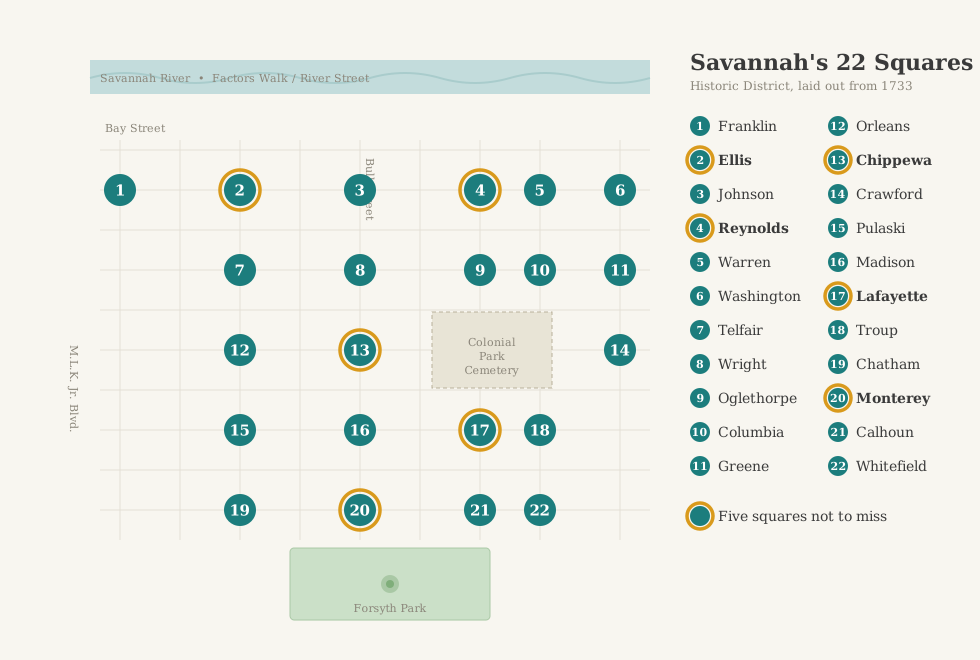
Laid out in 1733, Oglethorpe's plan arranged the city around a series of public squares, and 22 of them survive today. That orderly grid is what makes Savannah so easy to find your way around: the district runs from River Street and the waterfront on its northern edge down to Forsyth Park at the south end, a walk of a little over a mile from top to bottom.

Is Savannah walkable?

Wonderfully so. The Historic District is flat, shaded by live oaks, and one of the largest National Historic Landmark Districts in the country, with 22 parks and squares to wander through along the way. Most first-timers leave the car parked and see the whole district on foot, drifting from one square to the next. It is a city built for strolling, so comfortable shoes are the only thing you really need to pack.
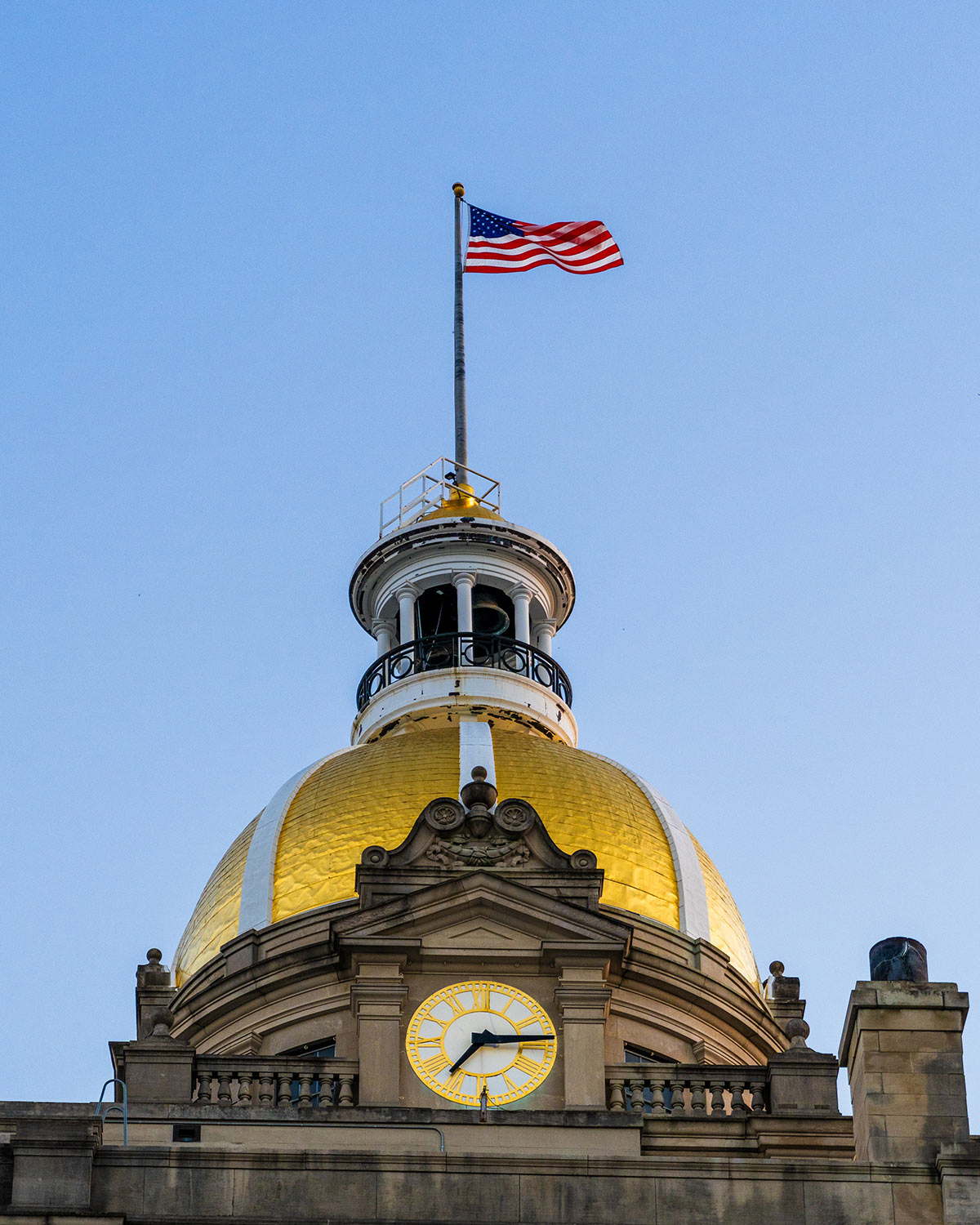
Savannah City Hall

Savannah's Historic District

Savannah's Historic District is the heart of downtown, and it is where you will spend nearly all of your first visit. Designated a National Historic Landmark in 1966, it is one of the largest and best-preserved historic districts in the country, packing centuries of architecture, gardens, and Spanish-moss-draped squares into a neighborhood you can cross on foot in under half an hour.

The whole district is built around Oglethorpe's grid. Bull Street runs like a spine down the middle, threading through five of the most beautiful squares, from Johnson Square near the river to Monterey Square in the south. Each square is a small park in its own right, ringed by historic homes, churches, and monuments, and the streets between them are shaded, flat, and made for wandering.

Getting your bearings is easy. Street and Bay Street mark the northern edge along the water, where the old cotton warehouses now hold shops and restaurants. Broughton Street, a few blocks south, is downtown's main street for shopping and dining. Keep heading south and the squares carry you all the way to Forsyth Park, the district's green anchor, with its famous 1858 fountain.

Almost everything a first-timer wants to see sits inside these bounds, which is exactly why Savannah is best explored slowly, one square at a time.

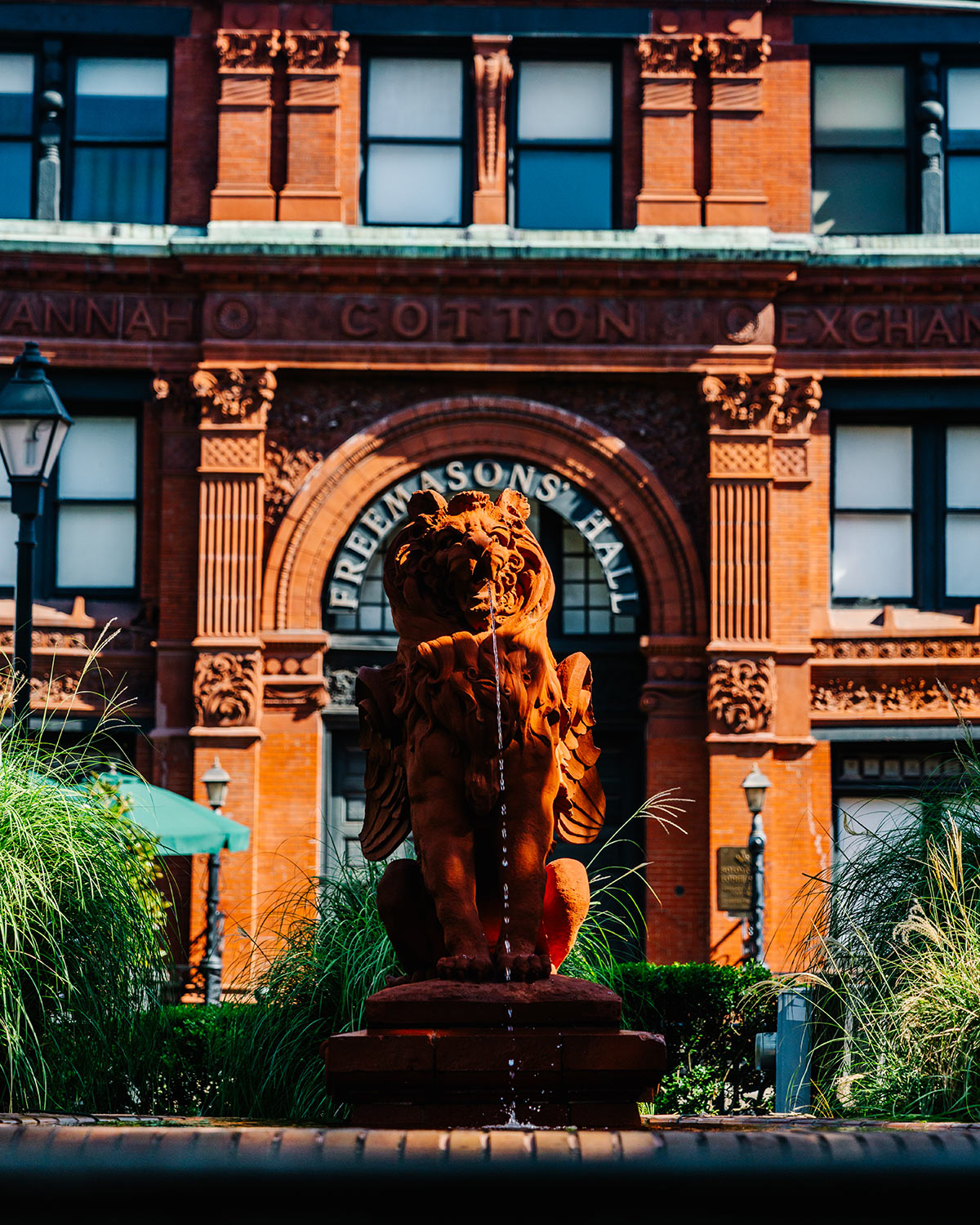
Savannah Cotton Exchangeß

Start Here: Three Places Every First-Timer Should See

An absolute must on your first visit is to explore the three main areas of the Historic District.

City Market

Four renovated blocks in the heart of the Historic District really capture the authentic atmosphere and character of the city's old open marketplace. Known as City Market, this is one of the most-visited spots in Savannah, with artists working in their lofts and exhibiting finished pieces for sale. You will also find restaurants, open-air cafés, live music, and shops offering crafts, accessories, and gifts. Grab a to-go cup and stroll from spot to spot, watch the artists at work, or hop on a horse-drawn carriage tour from the gazebo in the center.

River Street

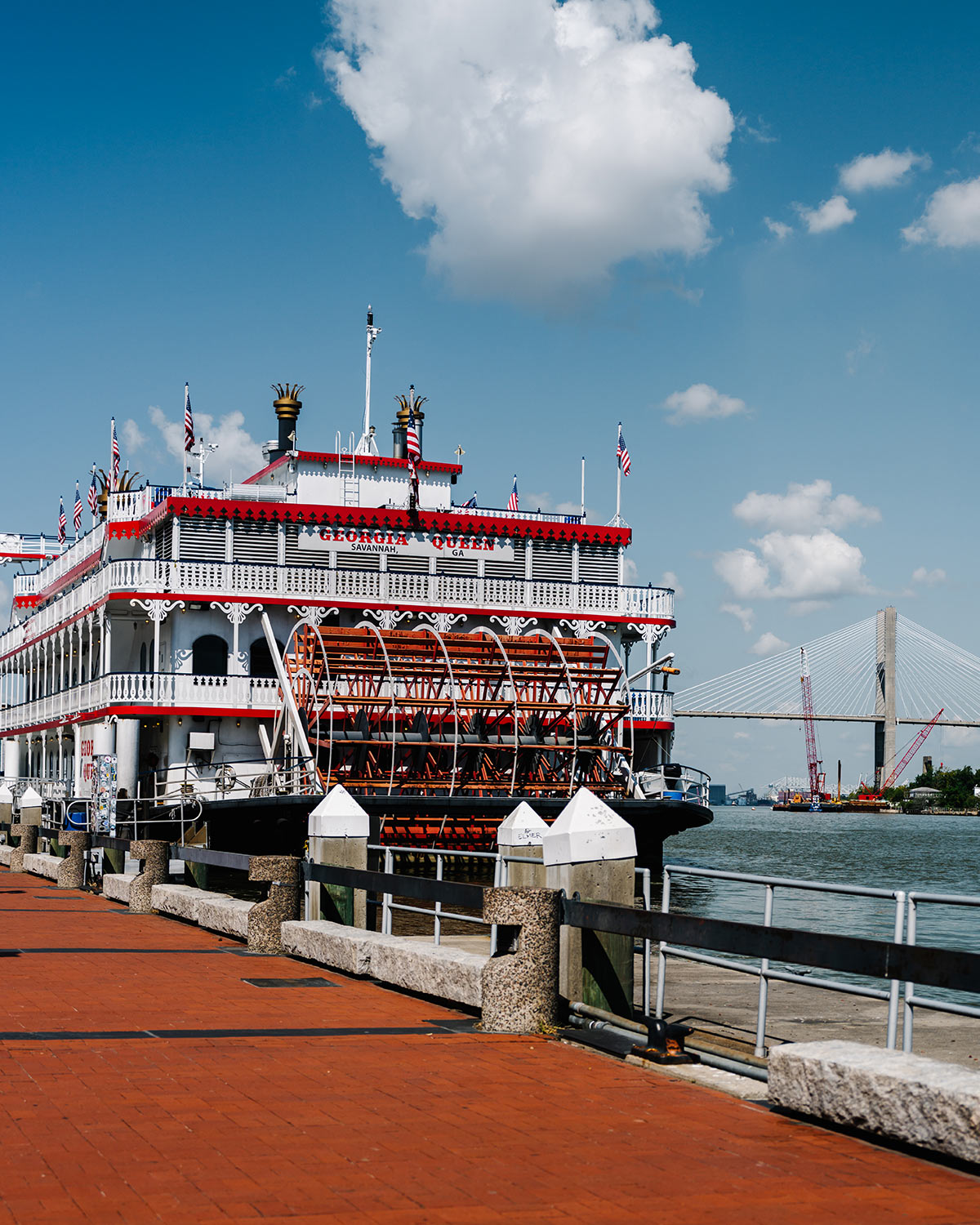
River Street and the Old Cotton Exchange were the center of commerce in 1887, back when cotton was king. Iron bridges, cobblestone streets, and stairways tie together a unique multilevel collection of 19th-century buildings. Where old cotton warehouses once stood, you will now find dozens of bars, restaurants, and shops. Look for the Waving Girl statue, wander Factors Walk along the bluff above, and catch one of the festivals that fill the riverfront through the year.

Forsyth Park

This 26-acre park at the south end of the Historic District is especially beautiful in spring, when the flowering trees and azaleas are in full bloom. The large ornate fountain dates to 1858, and joggers and walkers head here to make the mile loop around the perimeter. Forsyth Park is the pride of Savannah, and it sits just a minute's walk from The Gastonian on Gaston Street and the Eliza Thompson House on Jones Street.

Savannah River Street

The Top Things to Do in Savannah

Savannah rewards wandering. Its pedestrian-friendly layout and shaded squares make it easy to experience the history, beauty, and charm of this coastal city on foot. These are the sights first-time visitors rate most highly, grouped to help you plan.

The essentials

The Historic District: the walkable, square-studded heart of the city, and the reason most people come.
Forsyth Park: 26 acres of azaleas and live oaks around the iconic 1858 fountain.
River Street: cobblestones, cotton-era warehouses, shops, and restaurants along the water.
City Market: four lively blocks of artists, cafés, live music, and shops.
Chippewa Square: the James Oglethorpe monument, and the square made famous by the Forrest Gump bench.

Historic homes & house museums

Owens-Thomas House & Slave Quarters: a superb 1819 Regency mansion with intact urban slave quarters.
Mercer-Williams House: built in 1860 and made famous by Midnight in the Garden of Good and Evil.
Sorrel-Weed House: one of the finest Greek Revival and Regency homes in the state, and a favorite of ghost-hunters.
Davenport House: one of Savannah's best examples of Federal architecture, restored to the 1820s.
Juliette Gordon Low Birthplace: the childhood home of the founder of the Girl Scouts.

More in our full guide to Savannah's museums here.

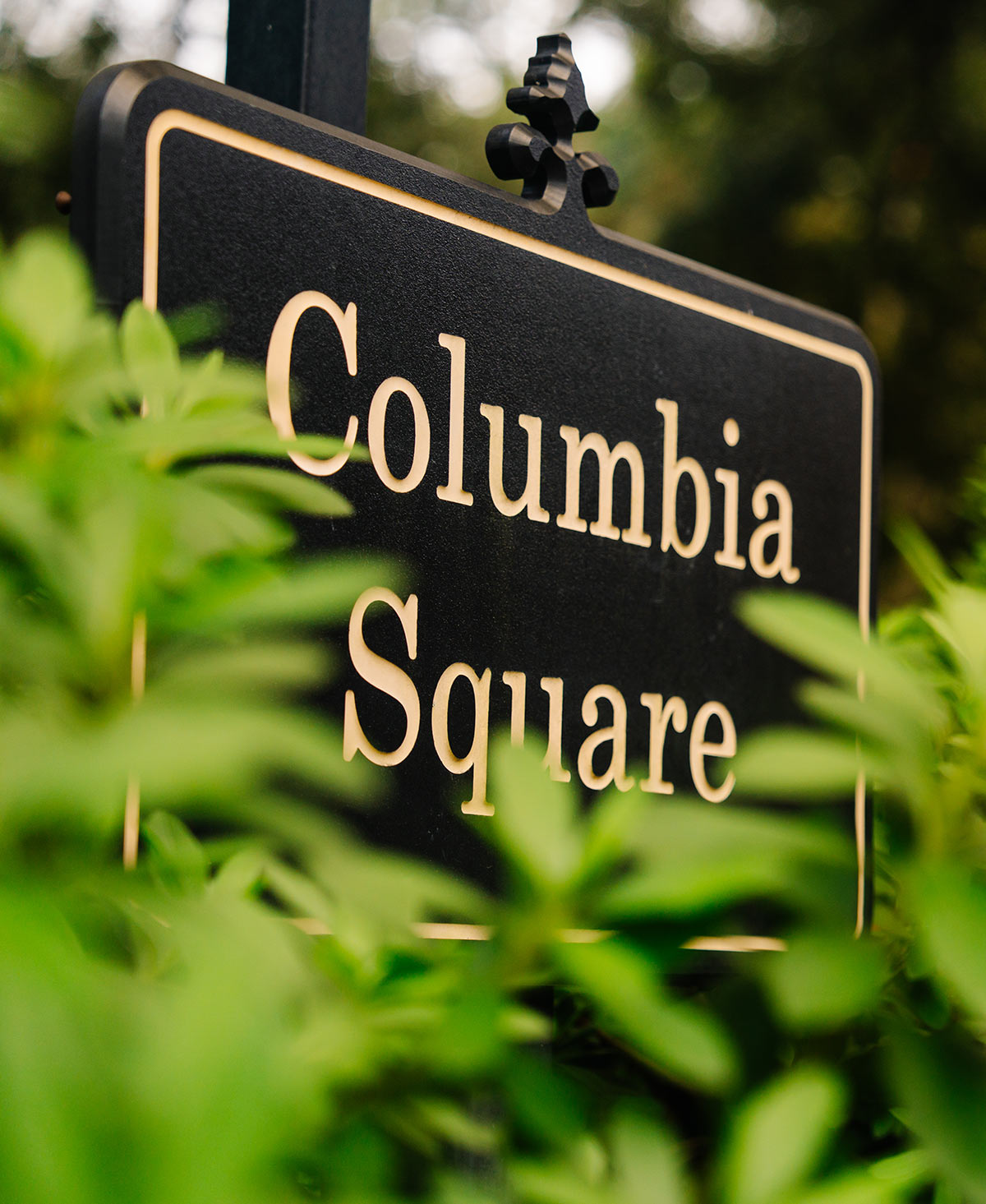
Columbia Square

A Walk Through Savannah's Squares

When General Oglethorpe laid out Savannah in 1733, he built the city around a series of public squares, and 22 of them survive today. Each is a shaded pocket park ringed by historic homes, churches, and monuments, and together they make Savannah one of the loveliest cities in the country to explore on foot.

Stringing the squares together is the classic way to see Savannah, and one of the best free things to do in the city. A simple self-guided walking tour runs straight down Bull Street, linking five of the finest in a row, from Johnson Square near the river to Monterey Square in the south. Take your time, and let one square lead you to the next.

Five squares not to miss

Ellis Square: reborn as a lively modern gathering spot off City Market, with a Johnny Mercer statue and a fountain the kids love.
Reynolds Square: home to the famous Olde Pink House restaurant and the Lucas Theatre.
Chippewa Square: the James Oglethorpe monument, and the square made famous by the Forrest Gump bench.
Lafayette Square: framed by the Andrew Low House and the childhood home of author Flannery O'Connor.
Monterey Square: the Mercer-Williams House and Temple Mickve Israel, and arguably the prettiest of them all.
Savannah Squares on the Map

Is there more to see in Savannah? Oh yes!

Savannah holds far more than any first visit can fit. Beyond the squares and the riverfront there are centuries-old churches and cemeteries to wander, day trips out to Tybee Island's beaches, the live oaks of Wormsloe, and the old coastal forts, and a calendar so full that there is always something happening. Time your visit for March and you will land in one of the largest St. Patrick's Day celebrations in the country, when the whole city turns out and even the fountains run green.

As a guest of one of the Historic Inns of Savannah locations, you have full access to our Concierges and Guest Service Representatives, who have a wealth of first-hand experience with the best things to do in Savannah. If you have questions, just ask. We are always happy to help you plan your days, point you toward a favorite restaurant, or share the spots most visitors never find.